


A Story in the Palms of Your Hands: Everything You Need to Know About Rhythmic Gymnastics Balls

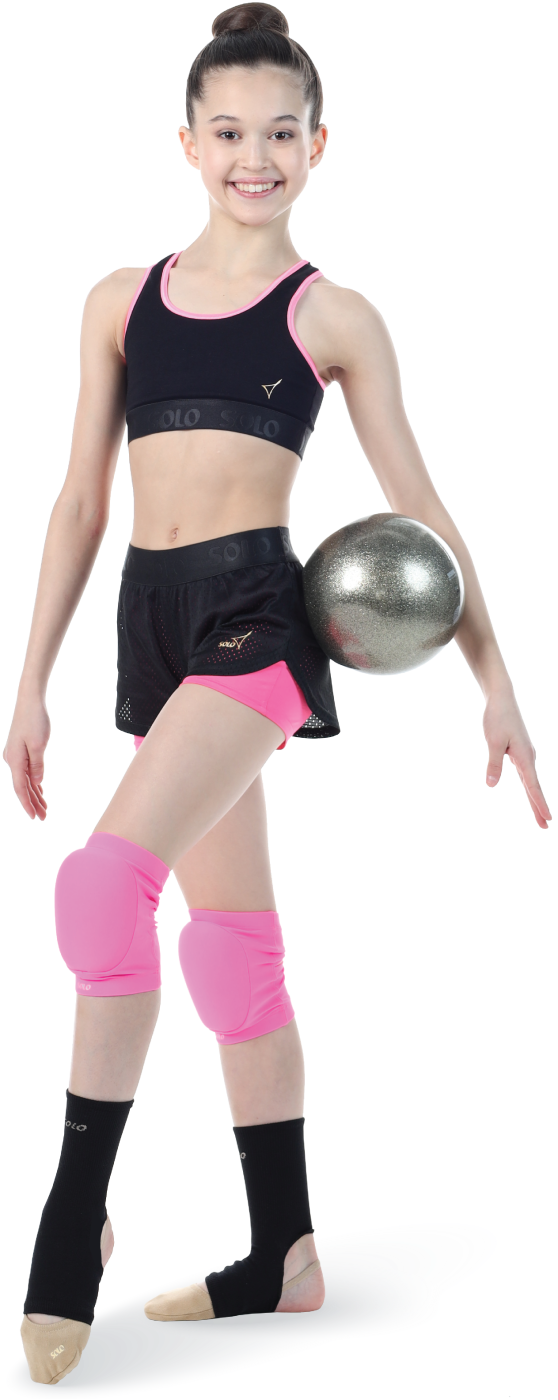
Imagine a hall where you can hear a faint echo and the light reflects off the mirrors. A young gymnast picks up her first ball. She doesn't yet know that this very movement will mark the beginning of her journey: leading to hours of training, first performances, and those moments when the ball becomes an extension of her very breath.
She started with a rope and a hoop, but it will be the ball that later helps her develop a sense of rhythm and coordination, teaches her to trust her body, and shows her how to move with softness and precision.
From Ancient Games to the Modern Carpet
Balls were used even in antiquity as part of gymnastic exercises to develop agility and plasticity. The ball did not enter rhythmic gymnastics immediately; it was only in the 1950s, when the modern system of exercises was being formed, that it became an apparatus which best conveyed the softness, expressiveness, and musicality of movement.
In 1963, the ball was officially included in the program of international competitions, and was later approved by the International Gymnastics Federation (FIG) as one of the five mandatory apparatuses. Since then, it has become not just a sports tool, but a symbol of grace and inner balance.
The Design of a Gymnastics Ball
Professional balls for rhythmic gymnastics are made from elastic materials that provide strength and flexibility, while the ball retains its shape when squeezed in the palm. They are manufactured without seams, which guarantees perfect geometry and a stable flight trajectory.
The ball's coating is created using a multi-layer technology: an inner elastic layer, a reinforcing middle layer, and an outer layer with a glitter or pearlescent effect that gives it shine under spotlights.
In professional models, the outer layer has a slight stickiness, ensuring a reliable grip and control during throws, catches, and rotations. Furthermore, a miniature valve allows for manual pressure adjustment, enabling the firmness to be tailored to the athlete's individual preference.
Balance and Dynamics
A key property of a professional ball is its perfectly aligned center of gravity. Even a slight deviation can alter the flight trajectory, so balance checking is a mandatory part of quality control. The ball is placed on a flat surface: if it does not roll on its own, the balance is correct. The ball's bounce height of approximately 50–70 cm when dropped from one meter also indicates proper elasticity and material quality.
Competition Balls
According to FIG requirements, the standard diameter for a competition gymnastics ball is between 18 and 20 cm. Manufacturers most often target 18.5 cm — considered the optimal balance between controllability and visual harmony. The minimum ball weight is 400 grams.
Each model undergoes tests for balance, coating density, and bounce uniformity. Such balls receive an official FIG certificate and are approved for use in international-level competitions. All certified models have the "FIG Approved" marking on their surface. The list of approved models is published on the International Gymnastics Federation's website and is updated every two years.
Training Models
For beginner gymnasts and children under 10 years old, models with a diameter of 16–17 cm are used — they are lighter and help develop a proper feel for trajectory and grip. Although these balls do not meet competition parameters in size, models from a product line that includes an FIG-certified ball are also considered professional and are used for training: they provide the same dynamics and quality but are suited for an earlier stage of preparation.
How to Choose a Ball
Choosing a ball is always a balance between the athlete's skill level, anatomy, and personal feel. It is important for the gymnast to feel the ball herself: how it rests in her palm, how it behaves when thrown, how it responds to touch. It is not just an apparatus, but a partner.
Care and Storage
The average lifespan of a quality ball is about 1–2 years with regular training. To make it last longer, avoid contact with sharp objects, direct sunlight, and temperature extremes. After each training session, the ball should be wiped with a soft, dry cloth or a slightly damp sponge with neutral soap to remove dust and keep the coating clean and grippy. The use of alcohol-based products or wet wipes is not recommended, as they can damage the surface.
For transport, it is convenient to use special bags that protect the ball from scuffs and dirt. It should not be stored under pressure or on a cold floor, as the material may deform. If small dents appear on the surface, they usually disappear after some time at room temperature.
SOLO: Technology, Inspiration, Movement
SOLO gymnastics balls are created in accordance with all FIG standards and the recommendations of professional coaches. Balance, elasticity, grip — every parameter is fine-tuned to the millimeter. This is an apparatus that helps build confidence in every movement and turns training into a space for internal growth and strength.
SOLO is not just a ball. It is a story in the palms of your hands.


0 comments